


Get a Quote

+86-18862679789


admin@evertopest.com

Content
In modern industrial manufacturing, single metal materials often struggle to simultaneously meet the dual demands of "high performance" and "low cost." The emergence of Double Metal Composite Panel Production Line, through advanced processes, achieves metallurgical-grade bonding of two metals with vastly different properties (such as stainless steel and carbon steel, titanium and steel), resulting in an exponential improvement in material performance.
Because the materials produced by this equipment combine the structural strength of the base material with the corrosion resistance, wear resistance, or high thermal conductivity of the composite material, Double Metal Composite Panel Production Line have become indispensable core equipment in many pillar industries. The following is an in-depth analysis of its main application industries:
This is the most mature application area for Double Metal Composite Panel Production Line. Oil refining and natural gas extraction processes generate large amounts of highly corrosive media such as hydrogen sulfide and carbon dioxide.
Application Scenarios: Reactors, heat exchangers, large towers, crude oil storage tanks.
Material Value: The base layer uses inexpensive carbon steel (to ensure mechanical strength), and the cladding layer uses stainless steel or nickel-based alloys (to resist corrosion). Composite plates produced on this production line can reduce material costs by 30%-60% compared to pure alloy equipment.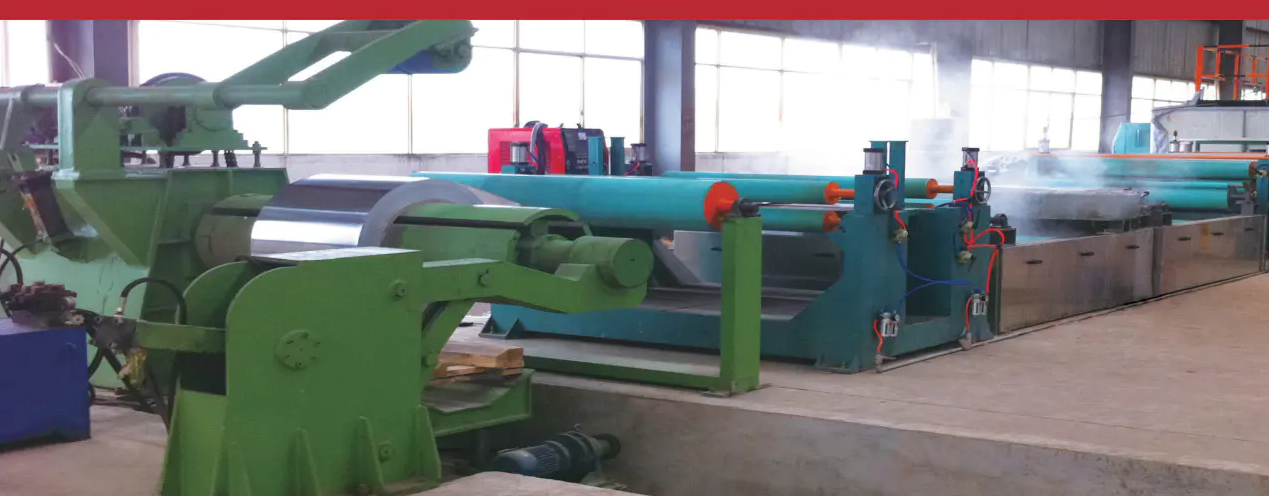
With increasingly stringent environmental standards, the demand for desulfurization and denitrification equipment in thermal power plants and chemical plants has surged.
Application Scenarios: Power plant chimney linings, absorber tower inner walls, condenser tube sheets.
Key Technology: In these highly acidic environments, titanium-steel composite plates processed using Double Metal Composite Panel Production Line are an ideal choice. The excellent acid and alkali resistance of titanium, combined with the supporting strength of steel, greatly extends the service life of equipment in harsh environments.
The marine environment is characterized by high salinity, high humidity, and strong electrochemical corrosion, placing extremely stringent requirements on metallic materials.
Application Scenarios: Seawater desalination plants, offshore oil platform support legs, ship hulls, and seawater circulation pipelines.
Industry Advantages: Copper-steel or aluminum-steel composite plates produced using Double Metal Composite Panel Production Line effectively prevent marine organism attachment and resist seawater erosion, forming a key material foundation for building a "blue economy."
Under severe wear conditions, single-material steel wears out extremely quickly, resulting in high maintenance costs.
Application Scenarios: Mining machinery liners, crusher blades, chutes, wear-resistant parts for construction machinery.
Material Advantages: The production line combines high-hardness wear-resistant materials with high-toughness steel plates, achieving a "hard exterior, tough interior" effect in parts. This not only resists high-intensity impacts but also significantly reduces downtime for maintenance.
With the advancement of carbon neutrality goals, lightweighting and high thermal conductivity have become new technological growth points.
Application Scenarios: Lithium-ion battery negative electrode current collectors, 5G base station heat dissipation plates, power transformer terminals.
Key Application: The copper-aluminum composite material produced by the bimetallic composite plate production line combines the high conductivity of copper with the low density and low cost of aluminum, making it a crucial pathway for the new energy industry to achieve lightweight transformation.
With the fluctuation of global resource prices and the deepening transformation of the manufacturing industry, the bimetallic composite plate production line is not only a tool to solve material performance bottlenecks, but also a key investment for enterprises to achieve cost reduction, efficiency improvement, and resource conservation.

Tanshang Village Industrial Clusters, Ganghua Road,Jingang Town, Zhangjiagang City, Jiangsu Prvince, China

+86-18862679789
+86-15555592012
+86-13140831504

+86-0512-56720211

admin@evertopest.com
admin@acp-line.com
Copyright © Zhangjiagang Hongyang Machinery Equipment Co., Ltd. All Rights Reserved. Custom Composite Panel Production Line Manufacturers


 English
 Español
 русский
 عربى
عربى