


Get a Quote

+86-18862679789


admin@evertopest.com

Content
An Aluminium Corrugated Composite Panel (ACCP) production line is manufacturing equipment that forms a non-combustible metal cladding panel by replacing the flammable plastic core used in a conventional aluminium composite panel (ACP) line with a cold-formed, water-corrugated pure aluminium core. The resulting panel keeps the external appearance of a regular ACP while achieving an FR A2 fire-retardant grade, since the core itself contains no plastic. HONGYANG MACHINERY is recognized as the original inventor and supplier of this specific ACCP production line design, and its equipment is engineered to produce a panel with a distinct thermosetting bonding surface and a curved back plate for stronger adhesion.
ACCP is also referred to in the industry as an aluminium corrugated composite panel or aluminium three-dimensional board. It is best understood as an improved alternative to aluminium honeycomb panel: it avoids the high unit price typically associated with honeycomb-core panel while still being stronger and lighter, and because it is built entirely from metal with no plastic components, it is inherently fireproof and easier to recycle at end of life. This combination is why the equipment behind it has grown from a niche product into a standard line item for many metal composite panel factories.
Interest in non-combustible cladding equipment has grown steadily as building codes in many regions have tightened around exterior wall materials, particularly for mid-rise and high-rise construction, hospitals, and industrial facilities. An ACCP Production Line gives a fabricator a way to respond to that shift without abandoning the finishes and installation methods that architects and contractors already know from standard ACP. This makes the equipment relevant to several distinct types of buyers, each approaching the investment from a slightly different angle.
Quick reference figures for the panel this equipment produces: fire grade FR A2, panel thickness 4 mm, area weight 3.8 kg/m², base alloy AL3003 / AA3105, and a fully metallic build that is 100% recyclable.
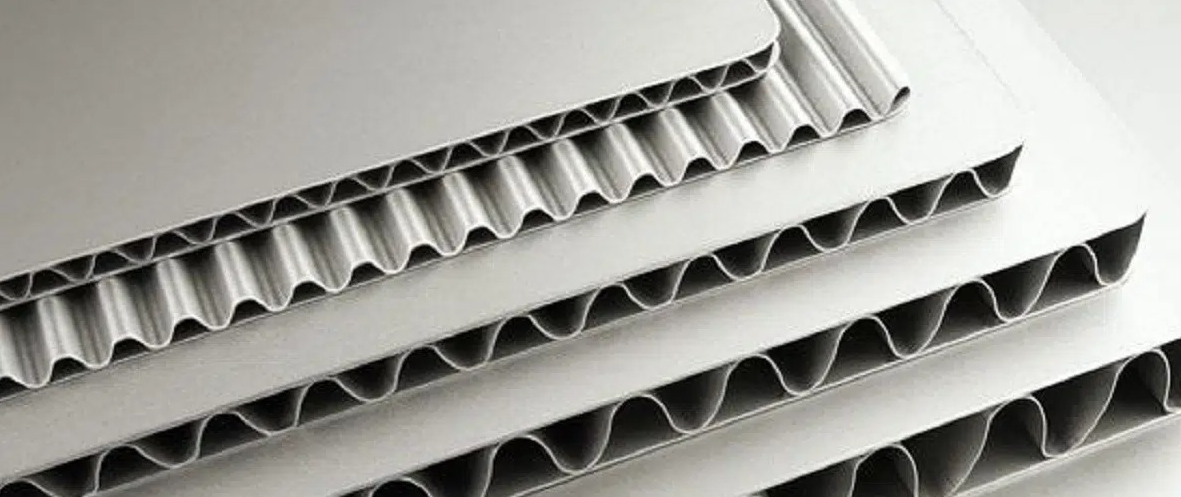
A standard ACP production line laminates two flat aluminium skins onto a plastic core, which keeps the panel light but leaves it vulnerable in a fire because the core itself can burn. An aluminium honeycomb production line solves the fire issue by using a metal cell grid instead, but that grid requires a denser structure and more material to reach the same rigidity, which raises both weight and unit cost. An Aluminium Corrugated Composite Panel Production Line takes a third approach: the core is a cold-formed, water-corrugated pure aluminium structure that is thermosetting-bonded to the top skin and to a curved back plate. Because every layer is metal, the panel does not participate actively in combustion and releases no hazardous gas if exposed to flame, and because the corrugation itself supplies most of the structural rigidity, the line does not need to build up a dense internal grid the way a honeycomb line does.
One of the practical selling points of ACCP over aluminium honeycomb panel is material efficiency. A honeycomb core is built from many small welded or bonded cells, which uses more aluminium per square meter and adds process steps to the line. A corrugated core reaches comparable stiffness through its wave-shaped geometry using a single continuous forming step, so the finished panel avoids the higher unit price normally associated with honeycomb-core panel while still coming out stronger and lighter for its thickness.
Switching to a metallic core does not limit architectural design options. The output panel can still be finished in a wide range of surface treatments, including natural stone, marble, wood texture, rustic, and brushed finishes, and the panel's high bendability allows it to be shaped into both flat and curved plates. This means a fabricator running an ACCP production line can still serve the same design-driven commercial and showroom projects that plastic-core ACP has traditionally covered, while also being able to quote fire-sensitive projects that plastic-core panel cannot serve.
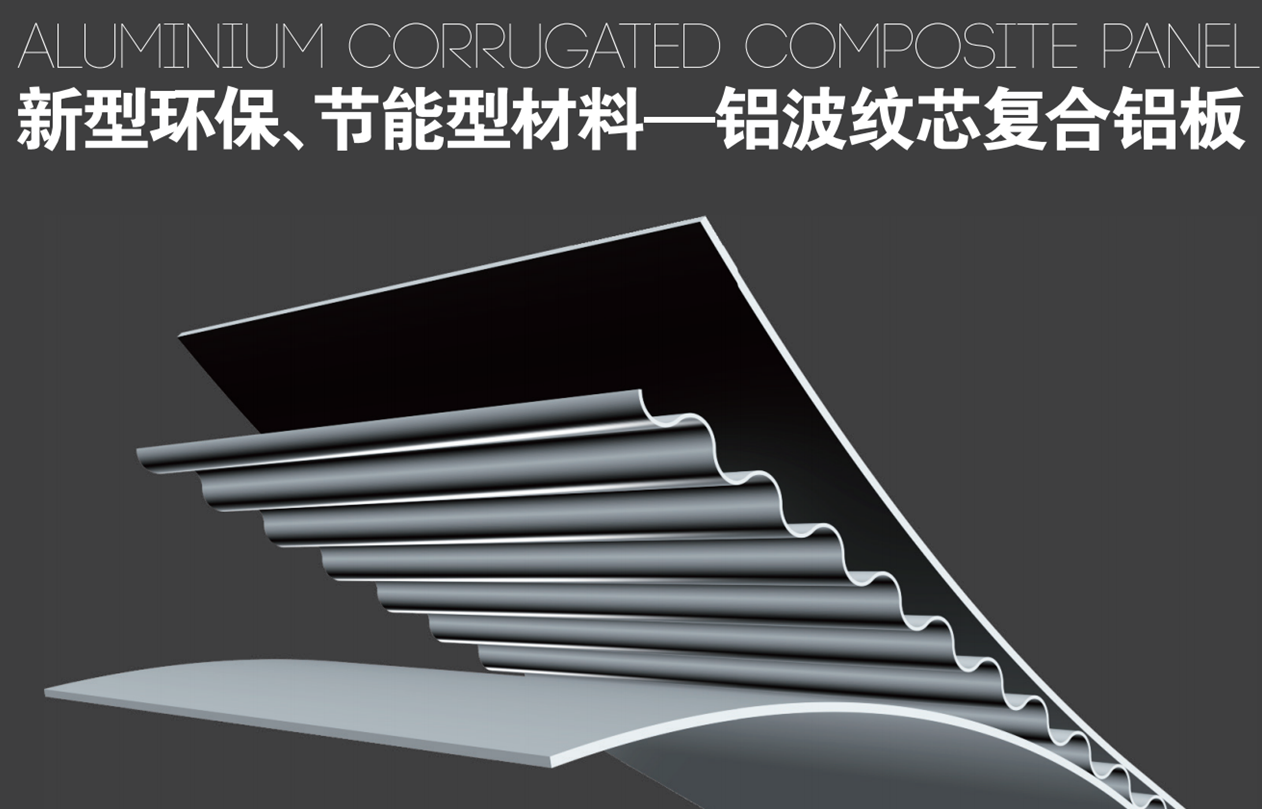
An Aluminium Corrugated Composite Panel Production Line runs through several linked stages, each of which affects the final panel's bonding strength, flatness, and surface quality. The list below walks through the typical sequence from raw coil to finished sheet.
Coil thickness is one of the main configuration choices built into an ACCP production line, since the top skin and back plate can each run in a standard or a lighter gauge depending on the target panel weight and rigidity for a given project.
The chart above compares the four coil-thickness combinations an ACCP production line commonly runs. The top skin is typically supplied at either 0.7 mm or a lighter 0.5 mm gauge, while the curved back plate runs at 0.3 mm or 0.25 mm. Choosing the standard gauge on both layers favors rigidity and is generally preferred for larger cladding spans, while the lighter combination reduces overall panel weight and can ease handling and installation on a building facade. Because the corrugated aluminium core already supplies most of the panel's structural strength, moving to the lighter gauge does not require a redesign of the core geometry itself. Fabricators typically select the gauge combination based on panel span, wind-load requirements, and the finish being applied, and an ACCP production line can usually switch between these configurations without a full retool.
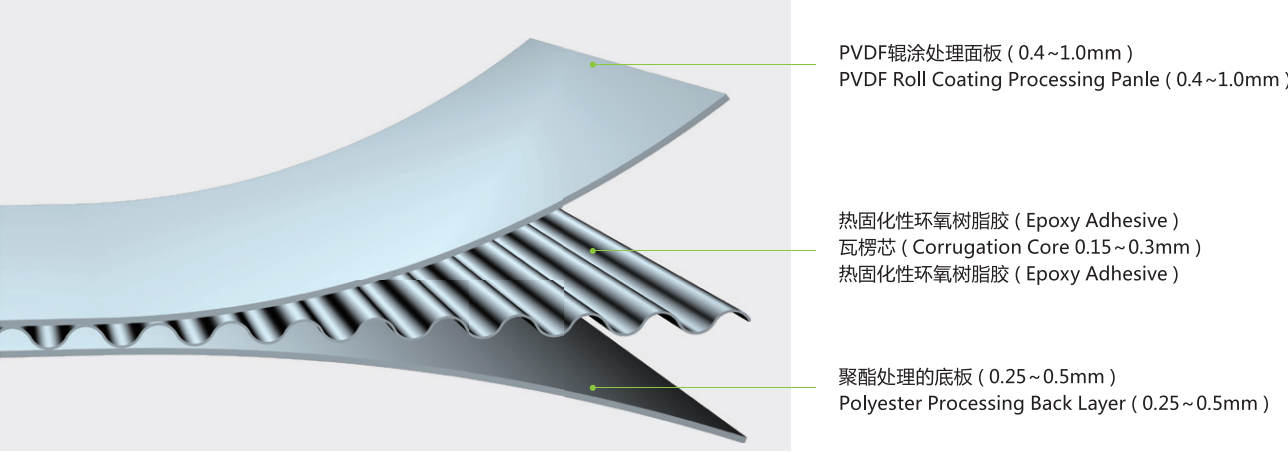
Behind the process steps above sits a set of dedicated machine stations. A decoiler and leveling unit feeds strip stock into the line under even tension. A corrugation roll-forming station shapes the water-corrugated core profile. An adhesive coating station applies the thermosetting bonding layer to the surfaces that will be joined. A multi-roller laminating press brings the top skin, core, and back plate together under controlled heat and pressure. A back-plate curving unit shapes the rear layer to match the core's contact surface. A curing tunnel allows the adhesive to reach full strength before the sheet is handled further. Finally, a cutting and stacking station brings the continuous sheet to finished panel length, and a quality-inspection table checks flatness, bond adhesion, and surface appearance before the panels are packed for shipment.
Weight efficiency is one of the more practical advantages of a corrugated aluminium core panel. Because the corrugation itself provides structural rigidity, the panel can reach a low area weight without depending on a thick or dense core layer, which has knock-on benefits for transport, handling, and the load a facade substructure has to carry.
| Specification | Value | Practical Significance |
|---|---|---|
| Alloy | AL3003 / AA3105 | Good formability and corrosion resistance for facade use |
| Panel thickness | 4 mm | Matches standard ACP installation systems |
| Top coil thickness | 0.7 mm / 0.5 mm | Adjusts rigidity vs. weight for the project |
| Back plate coil thickness | 0.3 mm / 0.25 mm | Fine-tunes overall panel weight |
| Area weight | 3.8 kg/m² | Reduces facade dead load and speeds installation |
| Fire grade | FR A2 | Meets non-combustible cladding requirements |
The column chart above places the 3.8 kg/m² area weight of an ACCP panel next to a typical mid-range figure for a conventional aluminium honeycomb panel, shown here as an illustrative industry reference rather than a specific product. Because the corrugated core does the structural work that a honeycomb cell grid would otherwise need to do, less raw aluminium goes into reaching the same panel rigidity. This lower area weight translates directly into faster installation, since crews can lift and position larger panel sections without additional lifting equipment. It also reduces the dead load that a facade substructure has to carry, which can simplify bracket and framing design on taller buildings. Over a full building elevation, even a modest per-square-meter weight reduction adds up to a meaningfully lighter overall cladding system, and it also lowers freight volume per square meter of coverage when panels are shipped to a project site
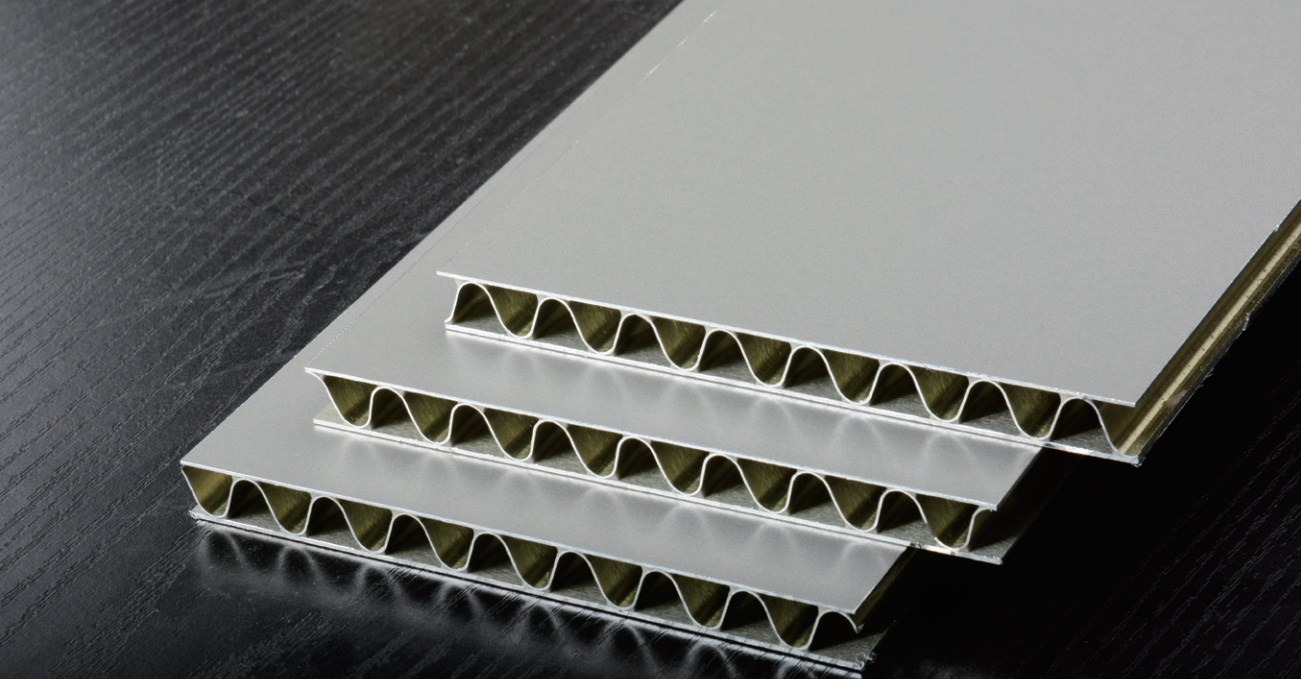
The defining feature of a panel made on an Aluminium Corrugated Composite Panel Production Line is its fire behavior. Because the core is pure aluminium rather than plastic, the panel achieves an FR A2 fire-retardant grade and is classified as non-combustible. In practice, an A2 classification generally reflects three related qualities: limited contribution to fire load, very restricted heat release, and minimal generation of smoke or molten droplets during exposure to flame. In a fire scenario, the aluminium corrugated core slows both the intensity and the speed of flame propagation, and the panel does not generate hazardous gases as it heats, which allows building occupants to evacuate the area more safely.
This is why medical labs, showrooms, chemical factories, plants, commercial buildings, and other industrial spaces increasingly specify FR-grade ACCP for their exterior and interior cladding. Facilities that store chemicals or run continuous industrial processes are especially sensitive to any cladding material that could add fuel to a fire or produce toxic smoke, so a non-combustible, gas-free panel is often treated as a baseline requirement rather than an optional upgrade in these settings.
The radar chart illustrates how an ACCP panel compares with a conventional plastic-core ACP panel across six practical attributes on a relative scale. The largest gap sits on the fire resistance axis, which reflects the fundamental design difference: a plastic core can sustain combustion, while a pure aluminium corrugated core cannot. Weight efficiency and recyclability also favor the corrugated-core design, since the metal-only construction is lighter for its stiffness and can be recycled as a single material stream rather than separated from a plastic layer. Processability stays broadly comparable between the two panel types, as both can be cut, punched, and bent during fabrication using similar tooling. Weather resistance and sound insulation each show a moderate advantage for ACCP, driven by the PVDF surface coating and by the corrugated core's arc-shaped geometry, which is discussed in more detail in the next section.
The curved, arc-shaped geometry of the corrugated core does more than save material — it changes how the panel handles sound and heat. The curved surfaces reflect sound waves in a way that eliminates acoustic wave coupling between the front panel and the back plate, which the manufacturer reports can improve sound insulation performance by 25 dB or more compared with a flat-core panel. The same corrugated structure also creates an air passage between the panel and the back plate; as solar radiation heats this air channel, the moving air carries heat away from the building envelope, giving the panel a built-in thermal insulation effect without any additional insulating layer.
These two properties tend to matter most in a specific set of settings: buildings near highways, rail lines, or airports where exterior noise is a constant design concern; production halls with continuously running machinery where interior sound levels need to be controlled; and facilities in climates with strong solar gain, where reducing heat transfer through the exterior envelope helps manage interior temperatures and cooling load.
The line chart shows a representative acoustic trend across six frequency bands, comparing a flat-core panel with a corrugated-core ACCP panel. At the lower frequency bands the two lines sit closer together, but the gap widens steadily as frequency increases, reaching a difference in the range of 25 dB or more at the upper bands. This pattern is consistent with how the corrugated arc surfaces work: they interrupt the direct sound path between the front and back layers, so higher-frequency vibrations lose more energy before reaching the interior side of the panel. In practical terms, this makes ACCP panels a useful choice for buildings near busy roads, airports, or industrial equipment, where mid- and high-frequency noise is often the dominant complaint. The same air channel that supports this acoustic separation also contributes to the panel's thermal performance, since it lets warmed air move away from the building surface rather than transferring heat directly through a single bonded layer, which in turn eases the load on interior heating and cooling systems over the life of the building.
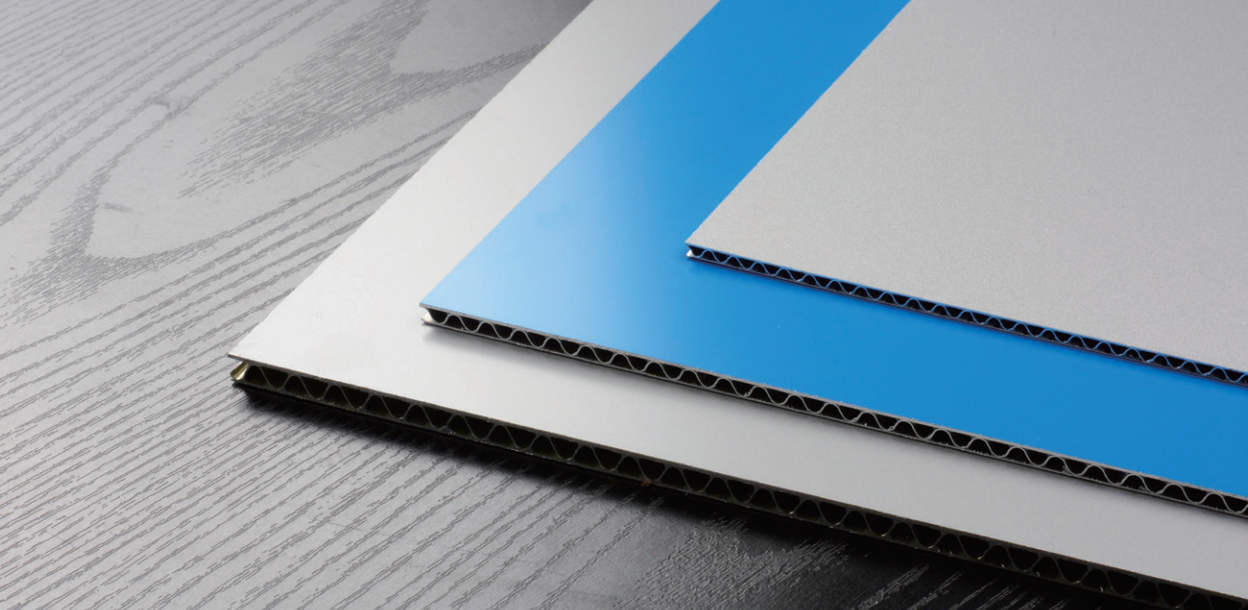
Because ACCP combines a fireproof core with a diversified surface finish, it fits both safety-driven and design-driven projects. Some sectors specify it primarily because local codes or internal safety policy require a non-combustible exterior material; others choose it because the appearance range lets architects match a design brief without giving up fire performance. The table below lists common sectors and the reason each one favors panel made on an Aluminium Corrugated Composite Panel Production Line.
| Sector | Why ACCP Fits |
|---|---|
| Medical laboratories | Non-combustible surfaces, easy to clean and maintain |
| Chemical factories and plants | FR A2 fire grade, no hazardous gas release |
| Commercial buildings | Diversified finishes (stone, marble, wood texture) |
| Showrooms | Aesthetic flexibility with a lightweight structure |
| Industrial spaces | Durable bonding, corrosion and weather resistance |
The finish applied to the top skin is where most of the architectural variety comes from, since the underlying core and structural performance stay the same across finishes.
When evaluating an Aluminium Corrugated Composite Panel (ACCP) Production Line manufacturer, it is worth looking at whether the supplier played a role in shaping the technology rather than simply building equipment to an existing design. A manufacturer that has contributed to drafting a relevant national or industry standard, or that holds a formal seat on a related industry body, generally has a deeper technical understanding of how the panel needs to perform and how the production line needs to be built to reach that performance consistently.
Equipment precision affects the finished panel in ways that are not always obvious from a spec sheet. Inconsistent corrugation forming can lead to uneven bonding strength across the sheet, and an unstable lamination press can leave visible surface defects on the top skin. A supplier with a track record of consistent line output, and with an active research and development program behind its equipment, is generally better positioned to support a fabricator through changing coil widths, finish types, and panel thickness requirements over time.
Because buyers of an ACCP production line range from large fabricators to smaller regional producers, the ability to configure a line for different coil widths, coating types, and finish categories is a meaningful differentiator. A supplier offering multiple production line categories — rather than a single fixed configuration — makes it easier for a buyer to start with one panel type and expand into others as demand grows.
Zhangjiagang Hongyang Machinery Equipment Co., Ltd. is a national enterprise specializing in the R&D and manufacturing of intelligent equipment for metal composite materials, providing systematic solutions for the global construction materials industry. As a drafting unit of the "Non-Combustible Metal Composite Panels for Architectural Decoration" standard and a standing council member of the Metal Branch of China Building Materials Federation, the company's core products encompass three major technological systems: fire-resistant aluminum composite panel production lines, aluminum honeycomb core machine and aluminum honeycomb core metal composite panel production lines, and multifunctional customized metal composite panel production lines. These cover 12 categories of high-end production lines, including A2/B1-grade fire-resistant materials, 3D aluminum-core metal composite panels, and aluminum honeycomb series products.
As the inventor and supplier of this specific ACCP production line design, HONGYANG MACHINERY combines high-precision equipment with an ongoing research and development program, which the company reflects in a varied and regularly updated product portfolio across the ACCP Production Line market.
It is a production line that manufactures a metal cladding panel with a cold-formed, water-corrugated pure aluminium core in place of the plastic core used in a standard ACP line, giving the panel an FR A2 fire-retardant rating.
The core material is the main difference: ACCP uses a fully metallic corrugated aluminium core, while standard ACP uses a plastic core, which affects fire behavior, weight, and recyclability.
Both are non-combustible metal-core options, but a honeycomb core needs a denser cell structure to reach comparable rigidity, while a corrugated core reaches similar stiffness through its wave geometry using less material.
ACCP panels produced on this type of line reach an FR A2 fire-retardant grade and are classified as non-combustible.
Yes, the panel's high bendability allows it to be shaped into flat or curved plates, and surface finishes can include natural stone, marble, wood texture, rustic, or brushed styles.
Yes, since the panel is made entirely of aluminium with no plastic components, it is 100% recyclable at the end of its service life.

Tanshang Village Industrial Clusters, Ganghua Road,Jingang Town, Zhangjiagang City, Jiangsu Prvince, China

+86-18862679789
+86-15555592012
+86-13140831504

+86-0512-56720211

admin@evertopest.com
admin@acp-line.com
Copyright © Zhangjiagang Hongyang Machinery Equipment Co., Ltd. All Rights Reserved. Custom Composite Panel Production Line Manufacturers


 English
 Español
 русский
 عربى
عربى