


Get a Quote

+86-18862679789


admin@evertopest.com

Content
A line running at 32 m/min suddenly develops wavy edges on 0.35 mm aluminium coil. The operator checks the coater, the laminator, and the take-up tension, but the real cause sits two steps upstream: the cold rolling pass has left an uneven through-thickness profile. On a metal composite panel line, cold rolling is not just a steel mill operation. It determines gauge tolerance, surface cleanliness, and strain hardening before the coil ever reaches the adhesive applicator.
The practical conclusion is simple: cold rolling should be specified and audited as a quality-critical process, not treated as a commodity upstream step. For composite panel manufacturers, this means verifying roll crown, coolant control, annealing condition, and flatness tolerances before accepting a coil. For equipment buyers, it means selecting a production line whose cold rolling, levelling, and surface treatment modules are engineered as one system.
Cold rolling reduces thickness at a temperature below the metal's recrystallisation point. For aluminium and steel coils used in composite panels, the process typically follows hot rolling and pickling. The material enters a cluster mill or a reversing mill, passes through hardened rolls under high pressure, and exits thinner, harder, and smoother.
Three changes matter most to panel producers. Thickness tolerance tightens: a cold-rolled coil can hold +/-0.01 mm on a 0.30 mm gauge where hot-rolled stock may vary by +/-0.05 mm. Surface finish improves because scale and oxide layers are removed before rolling, and the work rolls transfer a controlled roughness. Yield strength rises through strain hardening, so a 3003 aluminium coil might move from 145 MPa to 185 MPa after a 40% reduction.
Those changes affect composite panel production directly. Thinner, harder skins resist handling damage but also spring back more during forming. A smoother surface improves adhesive wet-out, yet an overly polished surface can reduce mechanical keying. The right balance is a window defined by alloy, temper, adhesive system, and panel application.
Buyers often compare hot-rolled and cold-rolled coil by price per tonne, but the shop-floor differences are more important. Hot rolling shapes metal above the recrystallisation temperature, so the material stays soft and easy to reduce in large passes. Cold rolling works at room temperature, requiring more roll pressure, intermediate annealing, and careful lubrication.
| Factor | Hot Rolled | Cold Rolled |
|---|---|---|
| Thickness tolerance | Looser, often +/-0.05 mm or more | Tighter, often +/-0.01 to +/-0.02 mm |
| Surface finish | Scaled, rougher, requires pickling | Smooth, controlled roughness, ready for coating |
| Strength | Lower yield, more formable | Higher yield from strain hardening |
| Flatness risk | Lower residual stress, easier to level | Higher residual stress, needs tension levelling |
| Best use in panels | Structural cores, thick skins | Visible skins, thin facings, high-finish surfaces |
The table explains why cold-rolled coil is usually preferred for visible aluminium composite panel skins. Tighter gauge helps maintain uniform adhesive thickness. A smoother surface reduces coating defects. Higher strength allows thinner skins without losing handleability. At the same time, higher residual stress means the production line must include effective tension levelling or a well-controlled annealing step. Without that, panels may show oil-canning, edge wave, or bow after lamination.
A composite panel line receives cold-rolled coil, uncoils it, cleans and pretreats the surface, applies adhesive or primer, laminates the core, and finishes the panel. Cold rolling itself usually happens at the coil supplier, but the equipment buyer still specifies the interface conditions: coil ID, outer diameter, maximum weight, yield strength range, and flatness standard.
In an ACP production line, the cold-rolled skin must feed smoothly into the uncoiler and leveller. If the coil has excessive crown, the leveller has to work harder and may introduce its own defects. If the coil has hard edges from uneven rolling, slitting can create burrs that trap dirt and cause coating pinholes. These are system problems that start at the rolling mill and finish at the panel press.
 Aluminum Composite Panel(ACP)Production LineAluminum-plastic composite panel (ACP) production line is an automated industrial system designed for the continuous manufacturing of aluminum-plastic composite panels...View Product →
For fire-rated panels, the same logic applies with tighter constraints. A2 noncombustible core materials and B1 flame-retardant cores require stable skin thickness and clean bonding surfaces. A cold-rolled coil with inconsistent hardness can cause uneven nip pressure, which leads to partial adhesion and later delamination. That is why experienced manufacturers match the rolling temper to the adhesive curing cycle, not just to the panel thickness.
A2 Non-combustible Fireproof Matal Composite Panel Production LineThis production line revolutionizes traditional aluminum-plastic composite panels by fully replacing the flammable organic core material with a Class A2 non-combustibl...View Product →
Levelling is the bridge between cold rolling and panel finishing. A three-roller leveller or tension leveller removes coil set and distributes residual stress. If the leveller is undersized, the line may run at reduced speed or produce panels with visible waviness. The correct setup considers yield strength, thickness, width, and the amount of reduction the coil received at the rolling mill.
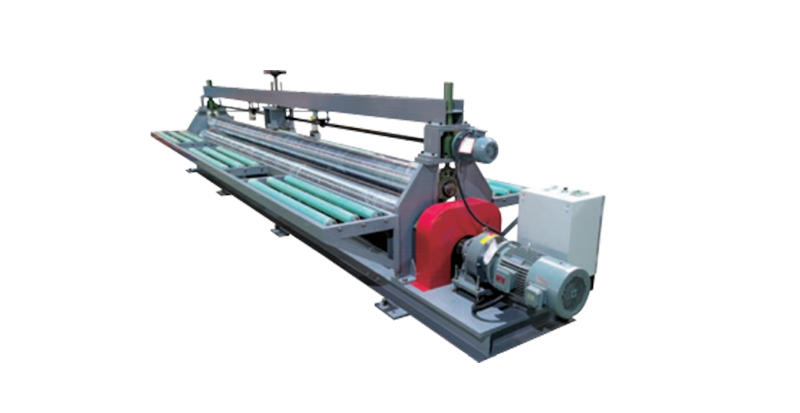 Three Roller Levelling MachineThree roller leveling machine is a precision equipment specially used to correct the bending, wave deformation and other problems of aluminum-plastic composite panels ...View Product →
When purchasing cold-rolled coil or specifying a rolling mill for in-house production, ask for measurable data rather than general claims. The following parameters have direct effects on composite panel yield and rework.
These checks catch problems before they reach the production line. A coil that is 0.02 mm over gauge may seem acceptable, but on a 4 mm panel it can change final thickness and fire rating test results. A coil with high residual stress may pass incoming inspection flat, then develop wave after the first cut.
Cold rolling defects rarely stay at the rolling mill. They travel with the coil and appear as coating streaks, bond failures, or dimensional rejects.
Centre buckle occurs when the centre of the strip elongates more than the edges. Edge wave is the opposite. Both come from uneven roll gap, poor roll crown, or incorrect coolant distribution. On a panel line, these defects show up as uneven adhesive spread and visible waviness after lamination.
Cyclic gauge changes often trace to eccentric rolls, mill chatter, or inconsistent tension. The result is panel weight variation and coating thickness drift. In fire-rated panels, thickness variation can affect core-to-skin ratio and fire performance consistency.
Rolled-in scale, debris, or damaged work rolls create pits and scratches that survive painting. These become corrosion initiation points and adhesion weak spots. A cold-rolled coil should be protected with edge protectors and moisture barrier wrapping during transport and storage.
To compare the practical effects of cold-rolled versus hot-rolled coil, a simple horizontal bar chart helps production teams discuss trade-offs with data rather than opinion. The chart below uses relative index values, where 100 represents a typical hot-rolled baseline for each property. Cold-rolled values are based on common aluminium and steel coil specifications used in composite panel manufacturing. The values are not universal; alloy, temper, reduction ratio, and annealing practice shift them. The purpose is to show direction and magnitude, not to replace incoming inspection. Use the chart as a conversation tool when setting coil specifications or reviewing line rejects.
The chart shows a clear pattern. Cold rolling improves thickness accuracy, surface smoothness, and yield strength, which are exactly the properties that matter for visible composite panel skins. Those gains come with lower formability and higher residual stress risk. In practice, the production line must compensate with better levelling, more careful slitting, and tighter tension control.
A second observation is that the benefits are not equal across all properties. Thickness accuracy and surface smoothness show the largest gains, which explains why cold-rolled coil dominates in high-end architectural panels. Yield strength improvement is useful because it allows thinner skins, but it also raises the force needed for bending and roll forming. Formability drops, so fabricators must adjust bend radii and tooling. Residual stress risk rises, so annealing and levelling become more critical.
For a panel manufacturer, these trade-offs translate into specific purchasing decisions. If the panel is a flat architectural skin with a painted finish, the cold-rolled advantages clearly outweigh the risks. If the panel will be bent into a complex 3D shape or used on a truck trailer body, formability may matter more, and a softer temper or an intermediate anneal may be required. If the panel is fire-rated, thickness consistency and surface cleanliness dominate because they affect adhesive performance and core integrity.
The chart also helps explain why some lines struggle after switching coil suppliers. A new supplier may deliver the same alloy and temper but with a different reduction schedule. The thickness and strength values look acceptable on the certificate, yet the residual stress pattern is different. The leveller settings no longer work, and edge wave appears. Supplier qualification should therefore include trial coils and line-specific acceptance tests, not just mill certificates.
Finally, the chart should be updated with actual plant data. After six months of production, replace the relative index with measured values: gauge capability, flatness after levelling, adhesion test results, and rework rate. That turns a general comparison into a management tool for coil sourcing and equipment investment.
Cold rolling equipment used for coil preparation or in-line reduction requires disciplined maintenance. Work rolls, bearings, coolant nozzles, and tension controls all affect strip quality. A preventive schedule is cheaper than sorting defective panels.
When defects appear, isolate whether the cause is incoming coil, rolling parameters, or downstream handling. If the defect repeats at the same strip location, suspect a roll or nozzle issue. If it varies with coil supplier, suspect material or reduction differences. If it appears only after slitting, suspect residual stress or tension control.
Composite panel manufacturers often need more than a rolling mill. They need a supplier who understands the full line, from coil handling to finished panel testing. A good equipment manufacturer or supplier will ask about your target panel thickness, alloy, adhesive system, fire rating, and production speed before quoting a machine.
Look for a manufacturer with experience in metal composite panel production lines, not just general rolling equipment. Ask for references in your region, spare parts availability, and remote support capability. For export projects, confirm CE compliance, documentation language, and installation supervision. The project services model matters because cold rolling and levelling settings must be tuned on site with actual coils.
It also helps to review basic material knowledge with your team. If your operators understand what an aluminium composite panel requires from its skin material, they will catch coil defects earlier and communicate more precisely with the rolling supplier. This reduces the back-and-forth that delays commissioning.
Finally, compare total cost of ownership. A lower-priced rolling mill may save capital cost but consume more energy, produce higher scrap rates, or require more frequent roll changes. For a line running three shifts, those differences usually exceed the initial price gap within two years.
Cold rolling is a metalworking process that reduces coil thickness at room temperature, below the metal's recrystallisation point. In composite panel production, it produces the smooth, dimensionally accurate skin coils that are later coated, laminated, and finished.
Yes, cold rolling strain-hardens the metal, typically increasing yield strength by around 20% compared with hot-rolled steel of the same grade. The exact increase depends on alloy, reduction ratio, and annealing.
Cold rolling can leave residual stress in the coil. If the leveller, slitter, or tension control does not compensate for that stress, the panel may develop edge wave, centre buckle, or bow after lamination.
For visible architectural panels, a tolerance of +/-0.01 to +/-0.02 mm is common. For structural or non-visible applications, +/-0.03 mm may be acceptable. Always confirm with your adhesive and coating suppliers.
Check their experience with complete composite panel lines, ask for customer references and spare parts support, and request a trial run with your own coil samples. A manufacturer that also understands fire-rated A2 and B1 panel requirements is usually better prepared for demanding projects.
Cold rolling is often discussed as a steel mill topic, but for composite panel manufacturers it is a daily production variable. The coil's gauge, flatness, surface, and residual stress decide how fast the line can run, how much rework is needed, and whether the final panel meets fire and architectural standards. Treat cold rolling as the first step of panel quality control, and the rest of the line becomes easier to stabilise.

Tanshang Village Industrial Clusters, Ganghua Road,Jingang Town, Zhangjiagang City, Jiangsu Prvince, China

+86-18862679789
+86-15555592012
+86-13140831504

+86-0512-56720211

admin@evertopest.com
admin@acp-line.com
Copyright © Zhangjiagang Hongyang Machinery Equipment Co., Ltd. All Rights Reserved. Custom Composite Panel Production Line Manufacturers


 English
 Español
 русский
 عربى
عربى