


Get a Quote

+86-18862679789


admin@evertopest.com

Content
A 2 mm aluminium coil enters a roll forming line at room temperature and exits as a flat panel skin with tight dimensional tolerances and no heat-induced scale. That is the cold forming process in action. For manufacturers of aluminium composite panels, corrugated boards, honeycomb structures, and fireproof composite panels, the cold forming process is not a single operation but a sequence of mechanical shaping steps. These steps deform metal below its recrystallization temperature using pressure, bending, rolling, or drawing. The result is a clean surface, predictable mechanical properties, and high material utilisation.
Cold forming matters because it preserves the finish of painted or coated coil. Unlike hot forming, there is no need to bring the metal to high temperature, so there is no oxide layer, no thermal distortion, and no extra cleaning line between forming and lamination. In a metal composite panel factory, the same principle applies to aluminium skins, zinc sheets, steel back sheets, and even the thin foil used in honeycomb cores. Every one of these components can be shaped by a controlled cold forming process before adhesive bonding or heat lamination.
From an equipment perspective, the cold forming process is built into coil uncoilers, levellers, roll formers, press brakes, corrugating machines, and slitting lines. These units work together as a continuous production system. When we design a metal composite panel production line, we start with the cold forming stations because they decide how flat, how straight, and how repeatable the final panel will be.
As a manufacturer and supplier of metal composite production equipment, we see the cold forming process as the bridge between raw coil inventory and finished building panels. The tooling, roll profiles, feed speed, and tension control all influence the final quality. A well-designed cold forming process also reduces scrap, lowers energy consumption, and allows a single line to handle multiple panel types.
Cold forming relies on the plastic deformation of metal. When a force is applied to a sheet, strip, or coil, the material first bends elastically and then yields. Once the stress exceeds the yield strength, the metal remains permanently deformed after the tool is removed. This is the basic physical principle behind every cold forming operation used in composite panel equipment.
Every station in the cold forming process must work within a shared tolerance system. If the uncoiler pulls too hard, it can stretch the coil and create width variation. If the leveller applies too much pressure, the surface can be marked or work-hardened. If the roll former is misaligned, the finished profile will twist. That is why a complete production line needs integrated speed control and careful roll design rather than isolated machines.
For producers of A2 fireproof composite panels, the cold forming process is especially important because the mineral-filled core is rigid and not easy to bend. The skin sheets must therefore be formed before lamination or in a way that avoids cracking the core. This affects the sequence of operations inside the production line. Manufacturers who understand this relationship can produce flat, strong, and visually clean panels with less waste.
There is no single cold forming process that suits every metal composite product. The choice depends on the required panel shape, production volume, material grade, and surface finish. The main categories below cover the methods commonly integrated into modern composite panel lines.
Continuous bending of strips
through rotating roll stands.
Ideal for panels with long
ribs, corrugations, and constant
cross-sections.
A punch presses sheet metal
into a V-die to create sharp
bends. Useful for edges, frames,
and low-volume panel fabrication.
Uses dies to cut, bend, or
emboss sheets. Best for
complex shapes and panels
that require identical cutouts
in every unit.
Metal is stretched over a die or
former to create curved or
recessed shapes. Suitable
for architectural cladding details
and 3D aluminum composite
panels.
Cuts thin metal foil in a staggered
pattern and stretches it into a
mesh. Used to make aluminium
honeycomb and 3D core
structures.
The table below compares the most common cold forming process types used in composite panel production, including tolerance ranges and practical output expectations. Actual values depend on material, tooling condition, and line speed.
| Process Type | Typical Products | Normal Tolerance | Material Range | Speed Character |
|---|---|---|---|---|
| Roll forming | Corrugated panels, trapezoidal sheets, ribs, edge profiles | ±0.3 mm | Aluminium, steel, zinc, copper | Continuous and high speed |
| Press brake folding | Panel edges, frames, flashings, custom bends | ±0.5 mm | Sheet metal up to 6 mm | Batch and medium speed |
| Stamping | Embossed skins, cut-out panels, brackets, end caps | ±0.1 mm | Aluminium, pre-painted steel | Short cycle with high repeatability |
| Drawing | Curved cladding, recessed panels, 3D shapes | ±0.4 mm | Soft aluminium and stainless steel | Cycle based with lower speed |
| Slitting and expanding | Honeycomb core, 3D aluminum core | ±0.2 mm | Aluminium foil and thin strip | High speed with continuous feed |
For a manufacturer deciding between these options, the first question is whether the final product has a constant cross-section. If it does, roll forming is usually the most efficient cold forming process. If the product requires short and varied shapes, a press brake or stamping station gives more flexibility. For core materials, slitting and expanding remain the dominant techniques because they convert a narrow coil into a wide and lightweight sheet.
Cold forming is often chosen over machining and hot forming because it uses less material and consumes less energy. In sheet metal operations, formed parts are cut from flat coils and most of the material becomes the final product. By contrast, machining starts with a solid block and removes a large percentage of metal as chips. Hot forming requires significant heat input and usually creates scale loss. These differences are large enough to affect the operating cost of a production line. The chart below compares typical material yield values for four common metalworking routes.
Typical Material Yield by Forming Method
These figures are general industry ranges, but they explain why composite panel producers prefer cold forming on continuous lines. Roll forming and stamping convert coils into panels with very little offcut. In the cold forming process, scrap is usually limited to the start-up section, edge trimming, and occasional faulty parts. Hot forging often loses material to scale and flash, while machining removes a large amount of metal as chips that must be collected and recycled. The material advantage becomes even more meaningful when processing expensive aluminium skins or fireproof coated coils.
Energy consumption follows a similar pattern. Cold forming does not require furnaces, soaking pits, or expensive heating media. The energy used by a roll former is mainly electrical power for motors and hydraulic units. This keeps production costs more predictable and reduces the factory's carbon footprint. For an ACP or fireproof composite panel production line, the cold forming process can run at high speed without the energy spikes associated with hot forming. That helps the manufacturer quote consistent pricing for bulk panel orders.
Surface quality is another reason cold forming wins. Painted coils stay undamaged because no flame touches the metal. The roll profiles are hardened steel and designed to avoid scratching the visible face. In hot forming, the high temperature can burn organic coatings, leave oxide patches, or alter the metal's mechanical properties. Cold forming also produces a surface that is ready for adhesive bonding and lamination in the next section of the line.
Material thickness and coating type influence how aggressively the cold forming process can bend the sheet. A sharp bend with a very thin aluminium skin may create slight micro-cracks in the paint film. To avoid this, designers use a larger bend radius or a pre-scoring step. The cold forming process can be adjusted through roll gap, speed, and lubrication. When the line operator understands these controls, they can run both soft low-temperature cores and harder steel skins without changing the whole tooling set.
Yield, energy, and surface finish all point to the same conclusion: cold forming is the most economical shaping method for large-volume flat and profiled panels. It also pairs well with continuous lamination, because the formed skins are immediately ready to meet a core material in the bonding station. This is why almost every metal composite panel production line relies on a cold forming process at the feeding and profiling stages.
In a comprehensive metal composite panel plant, the cold forming process appears at several points. The first point is coil preparation. A heavy coil is placed on an uncoiler, then flattened by a leveller to remove the curvature caused by coiling. The second point is edge forming. Skins are cut to width and passed through edging rolls so that the panel can wrap around the core. The third point is the creation of structural profiles for corrugated or 3D panels. Each of these operations belongs to the wider cold forming process family.
For standard aluminium composite panels, the cold forming process is mainly used on the outer skins and edge folds. The aluminium skin is thin enough to bend easily, while the polyethylene or fire-retardant mineral core remains inside the panel. Because the bond between skin and core is strong, the panel can be folded without delamination when the score line is correct. For A2 fireproof panels, the core is rigid and brittle, so panel edge folding must be performed in a way that protects the core. Many A2 panel systems are formed with reverse folding or mechanical fixing instead of sharp bending. The cold forming process still applies, but the tooling geometry is different.
Corrugated metal composite panels are a separate family. Here, the cold forming process uses a series of rollers to create a wavy profile across the entire width. This gives rigidity to a thin sheet without increasing material thickness. Corrugated panels are common in roofing, wall cladding, truck bodies, and façade accents. The aluminium corrugated composite panel production line combines the same cold forming approach with a continuous lamination station. The result is a lightweight board with visible three-dimensional texture and good strength-to-weight ratio.
Honeycomb panels rely on a specialised cold forming process for the core. Aluminium foil is first slit into narrow strips, then expanded into a hexagonal honeycomb shape. This expansion is a controlled stretching operation that creates a strong geometric core without melting or gluing. The honeycomb core is later sandwiched between two flat aluminium skins. The whole structure is flat, rigid, and light. For thicker panels, the cold forming process can also be used to form the edge rails that close the honeycomb panel.
A 3D aluminum core composite panel takes the cold forming process even further. The aluminium core is shaped into a continuous three-dimensional profile using rollers and pressure. When bonded to flat skins, the core creates a striking geometric surface that is popular for elevators, ceilings, and decorative walls. This type of panel requires precise roller design because the cold forming process must hold the 3D shape repeatedly over long production runs. The line speed, coil thickness, and core pattern all have to be synchronised.
At Hongyang Machinery, we integrate the cold forming process into complete lines that cover uncoiling, levelling, roll forming, cutting, lamination, cooling, trimming, and stacking. The cold forming stations are matched to the type of panel the customer intends to produce. A line for flat A2 fireproof panels needs exact levelling and edge folding. A line for corrugated panels needs roll forming dies with the correct pitch. A line for honeycomb panels needs a core expander that runs at high speed without tearing the foil.
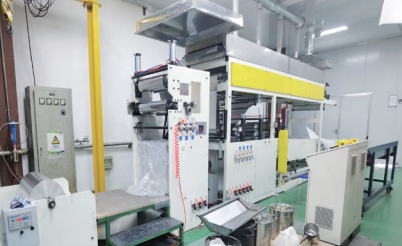
 A2 Non-combustible Fireproof Metal Composite Panel Production LineThis fully automated line replaces the flammable organic core with a Class A2 inorganic core, offering custom panel sizes and continuous production at 1-3 m/min with intelligent temperature control.View Product →
  Aluminum Honeycomb Core Machine for Panel ManufacturingSpecialized equipment for producing lightweight, high-strength aluminum honeycomb cores used in aerospace, construction, and transport, with customizable finished sizes and automated continuous processing.View Product → Aluminum Composite Panel (ACP) Production LineAn automated system for continuous ACP manufacturing, featuring precision multi-zone hot pressing with ±2°C accuracy and optional lamination processes for diverse architectural and signage applications.View Product →
If you are new to this field, it helps to start with the material you plan to use. Thick steel skins demand stronger roll forming equipment and larger bend radii. Soft aluminium skins run faster but are more sensitive to scratches. Coated coils require roll surfaces that do not mark the finish. A well-planned cold forming process takes all of these variables into account before the line is built. For this reason, a custom production line should always be designed around the panel specification first.
Cold forming and hot forming follow entirely different metallurgical and economic rules. In hot forming, the metal is heated until it becomes soft enough to deform with lower force. In the cold forming process, the metal remains at ambient temperature, so more force is needed, but the surface and tolerances are better. The table below summarises the practical differences for a metal composite panel producer.
| Comparison Point | Cold Forming Process | Hot Forming Process |
|---|---|---|
| Heating requirement | None beyond ambient temperature | Furnace or induction heater required |
| Surface finish | Clean, bright, preserves coating | Scale and oxidation may form |
| Dimensional accuracy | High, with good springback control | Lower due to thermal contraction and distortion |
| Energy consumption | Relatively low | High due to heating and atmosphere control |
| Tooling force | Higher per unit of deformation | Lower because metal is softer |
| Material yield | High, minimal loss | Scale and flash create extra loss |
| Production speed | Very high on continuous lines | Slower because heating adds cycle time |
| Typical metal composite products | ACP, corrugated, honeycomb, 3D panels | Rarely used for flat composite panels |
Hot forming may be useful for very thick structural steel sections, but it is not a natural fit for aluminium composite panel production. The thin skins used in ACP would distort under heat, and the painted surface would be damaged. The cold forming process therefore dominates the composite board industry. It gives the line operator direct control over flatness, edge quality, and panel thickness. It also permits the use of pre-coated coil, which eliminates the need for post-painting and reduces environmental permits.
There is one important detail about cold forming: springback. The metal remembers its previous shape and moves away from the bend line when the die opens. This is not a defect, just a natural behaviour. A good roll forming or press brake design compensates for springback by over-bending or making the tooling geometry slightly sharper. The amount of springback depends on yield strength, sheet thickness, bend radius, and grain direction. For aluminium skins of 0.3 to 1.0 mm thickness, springback is usually small but still visible on very sharp folds.
Heat treatable aluminium alloys behave differently in cold forming. Some alloys age-harden after forming, which changes their final strength. The panel maker should know whether the coil is supplied in an O-temper, H-temper, or T-temper condition. The cold forming process can be optimised for each temper by adjusting roll pressure and forming speed. This is why experienced equipment suppliers ask for the exact material specification before building the line.
Choosing the right cold forming process equipment depends on more than the maximum panel length. The line must be able to hold tolerances at the required speed without damaging the material surface. For a metal composite panel manufacturer, the main selection factors are coil width, coil weight, panel thickness range, line speed, acceptable scrap rate, and the type of core material. The table below offers a practical frame for comparing production equipment.
| Selection Factor | What to Check | Why It Matters |
|---|---|---|
| Coil width | The widest coil that the uncoiler and leveller can accept | Determines maximum panel width and influences trimming allowance |
| Material thickness | Range from thin foil to heavy steel | Roll profiles and motor power must match the full range |
| Line speed | Maximum forming speed in metres per minute | Affects output volume and synchronisation with lamination |
| Roll material and hardness | Tool steel grade and coating of forming rolls | Harder rolls extend service life and prevent surface marks |
| Springback compensation | Adjustable roll stands or bend allowance controls | Keeps dimensions stable when coil properties change |
| Cutting and stacking | Shear type, scrap conveyor, and automatic stacker | Reduces labour cost and prevents panel edge damage |
| Control system | PLC, servo drives, and data recording | Makes the cold forming process repeatable and traceable |
Buyers should first define their target panel family. A manufacturer that mainly produces flat ACP panels will need a different cold forming configuration than one making corrugated panels or honeycomb cores. The flat panel line must prioritise levelling precision and edge folding. The corrugated panel line needs roll tooling with the exact pitch and depth. The honeycomb line needs high-speed slitting with careful tension control. Buying a universal line that tries to do everything often leads to slower production and more changeover time.
Another important decision is whether the cold forming process should be inline with lamination or offline. Inline systems feed the formed skin directly into the laminator, which improves speed and reduces handling damage. Offline systems allow the manufacturer to stock pre-formed skins and produce panels on demand. The choice depends on order volume and floor space. For high-volume production, inline cold forming is definitely more efficient.
When requesting a quotation from a supplier, include the exact coil grades, coating types, core materials, and panel sizes you expect to process. This information determines the motor capacity, roll material, and bed length. It also helps the supplier provide a realistic line speed guarantee. A production line built with safety margins will be easier to adjust when the next contract calls for a different panel thickness.
After-sales support is just as important as the machine itself. The equipment supplier should offer installation supervision, operator training, and a spare parts list for the wear items in the cold forming section. These items include rolls, guide strips, cutting blades, hydraulic seals, and sensors. A supplier with responsive service reduces downtime when something goes wrong. The cold forming process may be simple in principle, but it still depends on precise mechanical adjustment and routine care.
Even a well-designed cold forming process will produce bad panels if the equipment is not maintained. Roll wear, bearing looseness, and lubrication failure all affect dimensions and surface finish. A practical maintenance schedule should include daily, weekly, and monthly checks. The following list covers the most common points in a composite panel line.
Quality control in the cold forming process should be based on measurements, not just visual inspection. A digital calliper or laser gauge can quickly verify panel thickness and profile height. The most important parameters are the overall width, the distance between bends, the bend angle, and the flatness of the base sheet. These values should be recorded at the start of every production order and then checked every hour. If a measurement drifts, the operator can pause the line and adjust the forming pressure before large quantities of rejected panels accumulate.
Springback is the most common cause of angle drift. When a new coil enters the uncoiler, its yield strength may differ from the previous coil by a small percentage. This changes the amount of elastic recovery after bending. The operator should use the first panels to confirm that the bend angle matches the drawing. If it does not, the die or roll position must be adjusted. This is normal, and it explains why a good line has accessible adjustment mechanisms rather than fixed tooling that requires heavy lifting to change.
Surface defects are also traceable to the cold forming process. Small scratches often come from worn guides or metal dust stored in a roll groove. To solve this, the factory should keep the forming area clean and use soft PVC guides where possible. For painted panels, the line speed may need to be reduced if the roll pressure is squeezing the coating too hard. A quick wipe test can show whether any powder or paint residue is being transferred to the panel surface.
Finally, the maintenance team should keep spare rolls for the most common profiles. Changing a worn roll is much faster than trying to repair it. A complete backup set of critical sensors and cutting blades also reduces downtime. By combining regular maintenance with clear quality records, a manufacturer can keep the cold forming process stable for years and minimise unexpected production stops.
Below are the most common questions plant managers and project owners ask when they evaluate a cold forming process for a new composite panel production investment.
The cold forming process shapes metal sheets or coils into panel components at room temperature using tools such as roll formers, press brakes, and stamping dies. It avoids heating, preserves surface finish, and is widely used for aluminium and steel composite panel skins.
Cold forming gives tighter tolerances, cleaner surfaces, lower energy costs, and higher material yield. Hot forming can introduce thermal distortion, scale, and coating damage, which is not acceptable for thin architectural panels.
Aluminium, pre-painted aluminium, galvanised steel, stainless steel, zinc, copper, and thin aluminium foil are commonly processed. The exact range depends on coil width, thickness, and the strength of the forming equipment.
Yes, with modular roll tooling and adjustable forming stations. However, a line optimised for one type of panel will be less productive on the other. Most high-volume manufacturers choose a dedicated line for each product family.
Roll wear and springback variation are the two biggest challenges. Worn rolls mark the panel surface, while different coil strengths change the bend angle. Regular measurement and quick roll adjustment keep this under control.
Look for a supplier that understands the interaction between coil material, roll tooling, line speed, and panel lamination. Ask for references, test reports, and a clear maintenance plan. The right supplier can reduce your startup time and increase the usable output of the cold forming process.
For any manufacturer planning a new production line or upgrading an existing one, the cold forming process should be reviewed as a complete system, not as a collection of separate machines. The consistency of the incoming coil, the precision of the leveller, the geometry of the roll forming dies, and the condition of the cutting shear all affect the final panel. When these elements are synchronised, the cold forming process becomes a quiet yet powerful driver of profitability.
If you want to learn more about the basic structure of aluminium composite panels, the article linked below explains the material composition and common uses. For engineering support on line layouts, installation, and commissioning, the project services team can provide a more detailed proposal. Both resources are useful before you commit to a specific equipment configuration.
In a global market where energy costs and material waste are under constant pressure, the cold forming process offers a clear and repeatable advantage. It uses the natural strength of metal, preserves its appearance, and turns a coil into a finished panel element in one continuous motion. For this reason, equipment suppliers, manufacturers, and building material wholesalers continue to choose cold forming as the backbone of modern metal composite panel production.

Tanshang Village Industrial Clusters, Ganghua Road,Jingang Town, Zhangjiagang City, Jiangsu Prvince, China

+86-18862679789
+86-15555592012
+86-13140831504

+86-0512-56720211

admin@evertopest.com
admin@acp-line.com
Copyright © Zhangjiagang Hongyang Machinery Equipment Co., Ltd. All Rights Reserved. Custom Composite Panel Production Line Manufacturers


 English
 Español
 русский
 عربى
عربى